
Fecal DNA metabarcoding reveals seasonal and annual variation in willow ptarmigan diet
Imagine residing in an alpine environment with seasons changing between warm summer days with plentiful food to a snow-covered winter landscape. In this harsh winter settings, most species retreat due to low temperatures, icy coverings, and frequent blizzards. Here you find the willow ptarmigan, one of the few resident birds in our alpine ecosystems. To survive a harsh winter, evolution has uniquely adapted the willow ptarmigan. During the challenging winter season, it subsists on a very lean diet consisting of twigs and buds. As the spring arrives and the lowlands burst forth with fresh, nutritious plant material, the snow cover in willow ptarmigan’s habitat may persist well into May/June. This is a crucial period for the ptarmigan, as it must build up reserves for the upcoming breeding season. We know that early access to nutritious fresh vegetation affects the ptarmigan positively, enhancing their condition and contributing to a better breeding success.
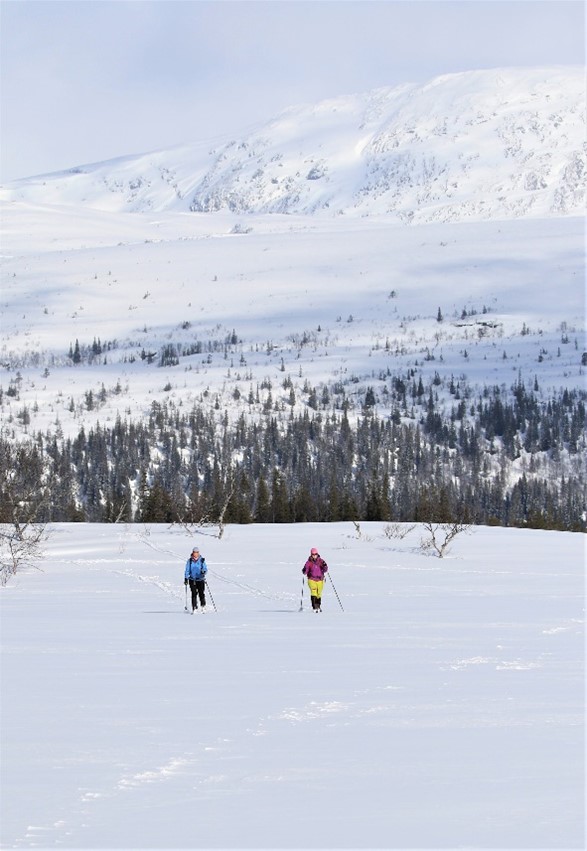
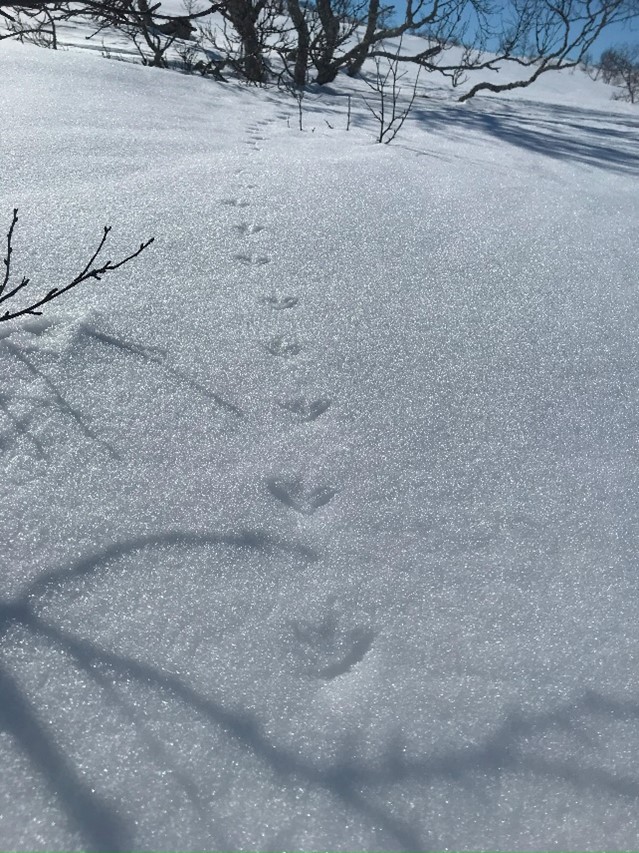
Fig 1. Left side: Field work at beautiful Lifjellet. Right side: We are following the tracks, searching for scats
Climate change profoundly impact alpine areas where willow ptarmigan has adapted over thousands of years, and an earlier spring and a longer growing season is expected. These changes set new premises for the distribution and abundance of alpine species, and it is challenging to predict how this will affect food web dynamics and trophic interactions in the ecosystems in near feature. Understanding how climate change will affect vulnerable keystone species such as the willow ptarmigan is crucial. Until now, our knowledge of ptarmigan diet during the critical period between winter and summer, and how the diet is affected by changes in the arrival of spring and duration of snow cover has been limited.
To address this, we conducted a study at Lifjellet in Lierne municipality. Over three consecutive years (2019—2021) we followed the tracks from willow ptarmigan from winter to summer. (Fig.1). Weekly visits from March to June allowed us to collect fresh scats from these birds (Fig. 2). Through microsatellite analyses, we obtained information about sex and species, while DNA metabarcoding provided novel insight into the willow ptarmigan’s diet. Additionally, satellite data provided information about the arrival of spring (NDVI), and snow cover throughout the season (NDSI), and enabled us to explore how these abiotic factors influence willow ptarmigan diet across years.
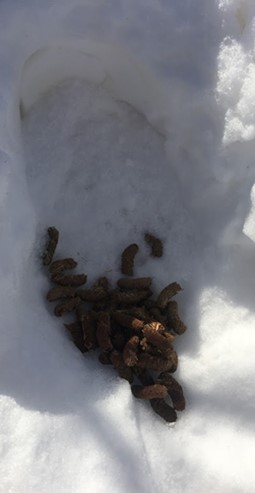
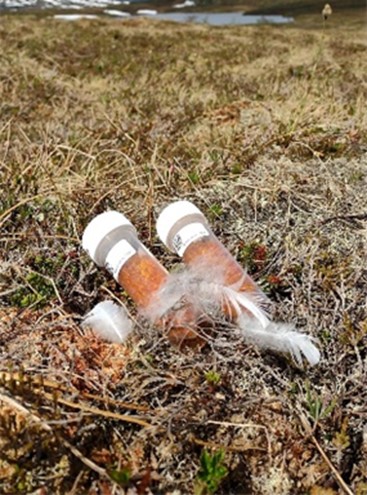
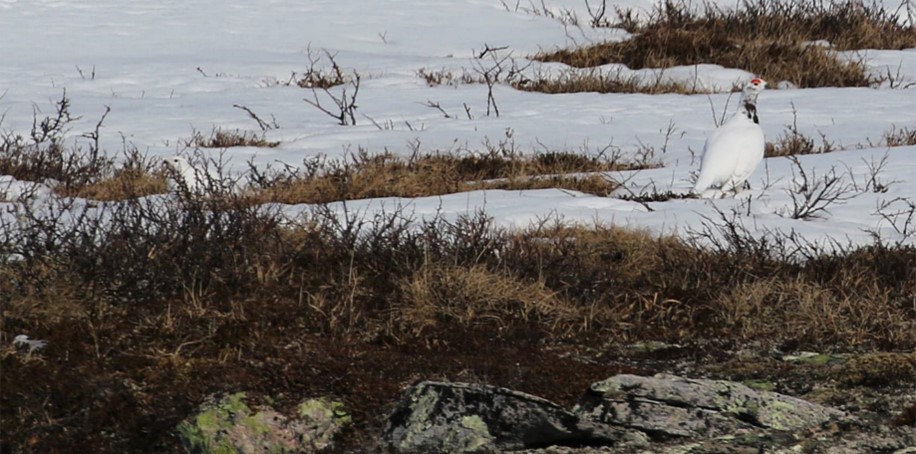
Fig 2. Upper left: Scats from willow ptarmigan. Upper right: Sampling of scats. Bottom: Willow ptarmigans on spring snow
In our study, we identified 18 significant diet components and notably found that species from the functional groups trees and dwarf shrubs dominated the diet (Fig. 3). Within these groups three genera constituted the most important diet components: Betula, Vaccinium and Empetrum. Not surprisingly, willow ptarmigan forages on birch when the snow cover is at its thickest. However, they also manage to find more nutritious vegetation throughout the winter. Microhabitats, such as exposed ridges and vegetation below old spruce trees, provide access to evergreen shrubs like crowberry and blueberries.
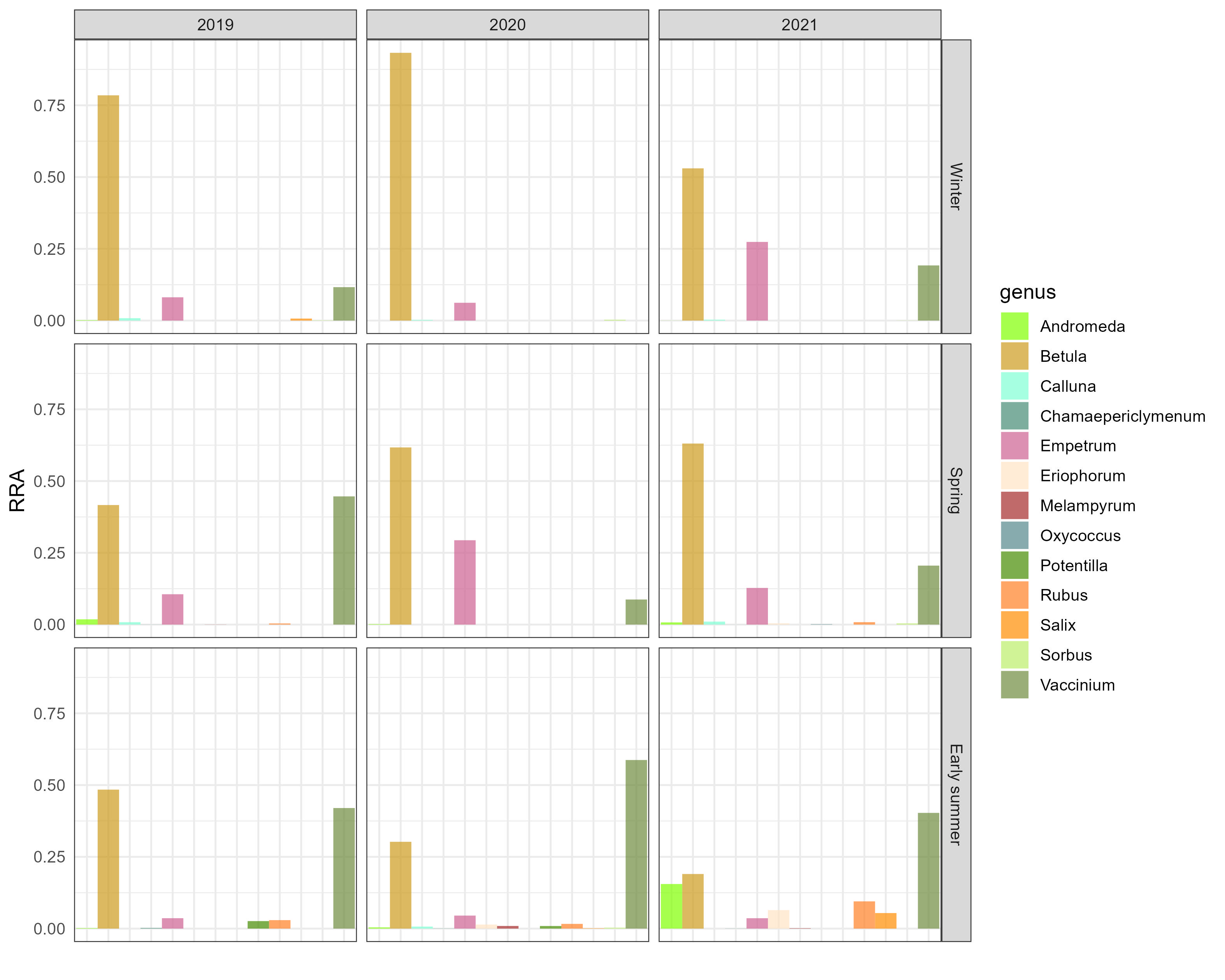
Fig. 3. Stacked bar chart showing the proportions of reads assigned to taxonomic range genus from the fecal samples collected from willow ptarmigan (n=99)
As spring arrives, willow ptarmigan switches from a narrow winter diet to a spring diet with increasing elements of nutritious field vegetation including dwarf shrubs, graminoids and forbs. While birch constitutes a declining part of the diet throughout the spring, other species such as blueberries show a marked increase as the season progresses (Fig 4).
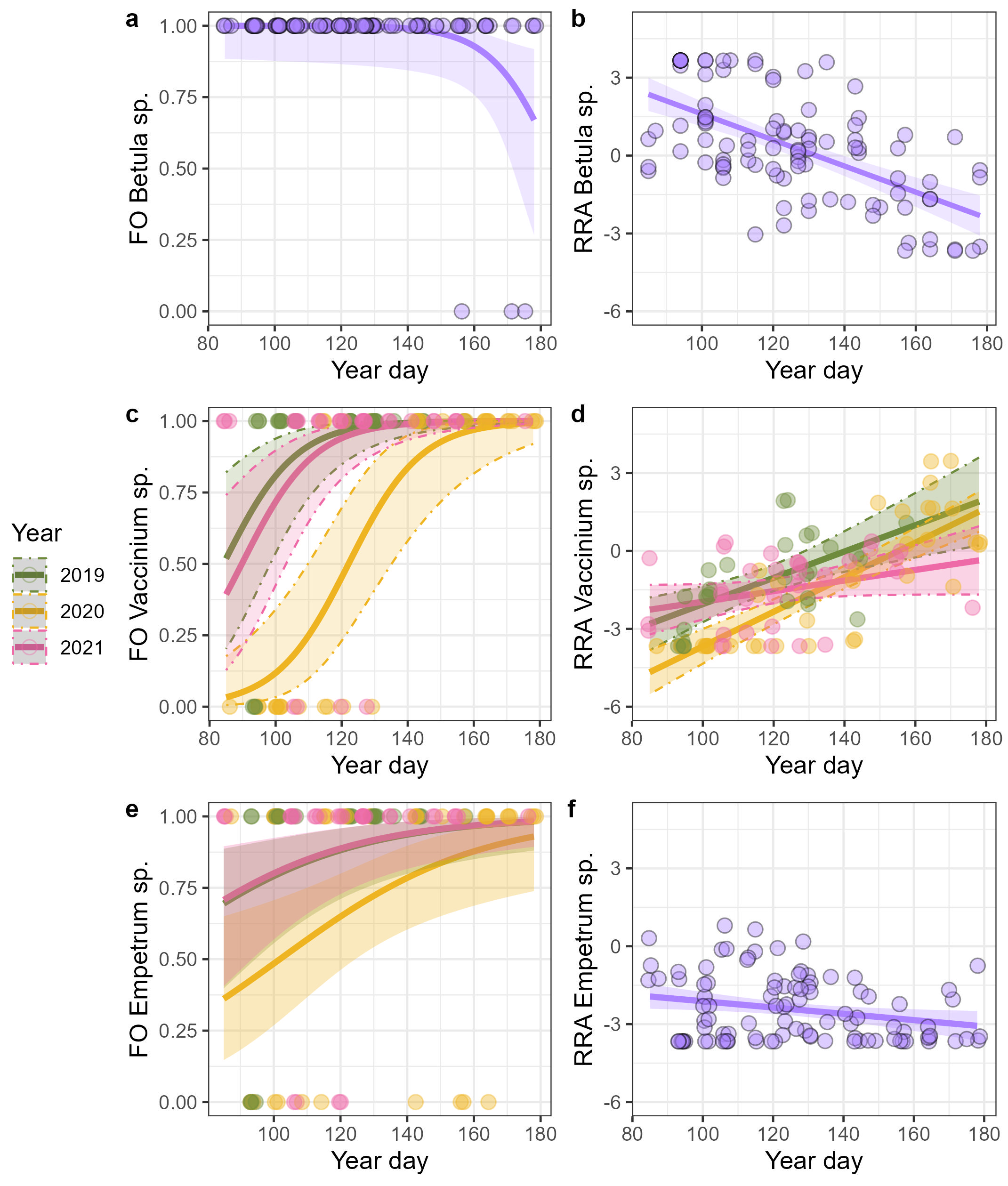
Fig. 4. Estimated relationship (solid line) between FO and RRA of Betula (a; b), Vaccinium (c; d) and Empetrum (e; f) in samples and day of the year.
Spring, as previously mentioned, is a crucial time for the ptarmigan. During this period, they must accumulate reserves to prepare for the upcoming breeding season. While the ptarmigan’s diet, and their breeding success, varies across year, we found that the variation in diet was better explained by date of the year than by climatic variables such as snow cover (NDSI) and vegetation phenology (NDVI). Our new understanding raises several new questions: Are there other variables beyond arrival of spring that impact the willow ptarmigan’s diet across years? Could we be witnessing a classic Bottom-up effect? Perhaps the quality and nutrient content of the different alpine plant species varies throughout the season and across years. Does the ptarmigan selectively forage on species that consistently provide an optimal diet? Perhaps it is a combination of the quality and availability of their plant-based diet, that influence their condition and breeding success? Considering the ongoing global warming, how will both the abundance and quality of various plant species be affected? To find answer it is only one thing to do - continue the investigations! Our annual sampling of ptarmigan scats from winter to spring at Lifjellet continues, and in 2023, we extended our study to include an additional coastal study area in Namsos municipality. Additionally, we have initiated autumn sampling of scats, and are in the process of planning surveys to assess vegetation abundance and quality.
Stay tuned - more updates on willow ptarmigan, diet and climate change are on the horizon!
Full reference: Ingvaldsen, E.W., Østnes, J.E., Kleven, O., Davey, M., Fossøy, F. & Nilsen, E.B. (2024) Fecal DNA metabarcoding reveals seasonal and annual variation in willow ptarmigan diet. Royal Society Open Science, 11, 231518 (doi: https://doi.org/10.1098/rsos.231518)